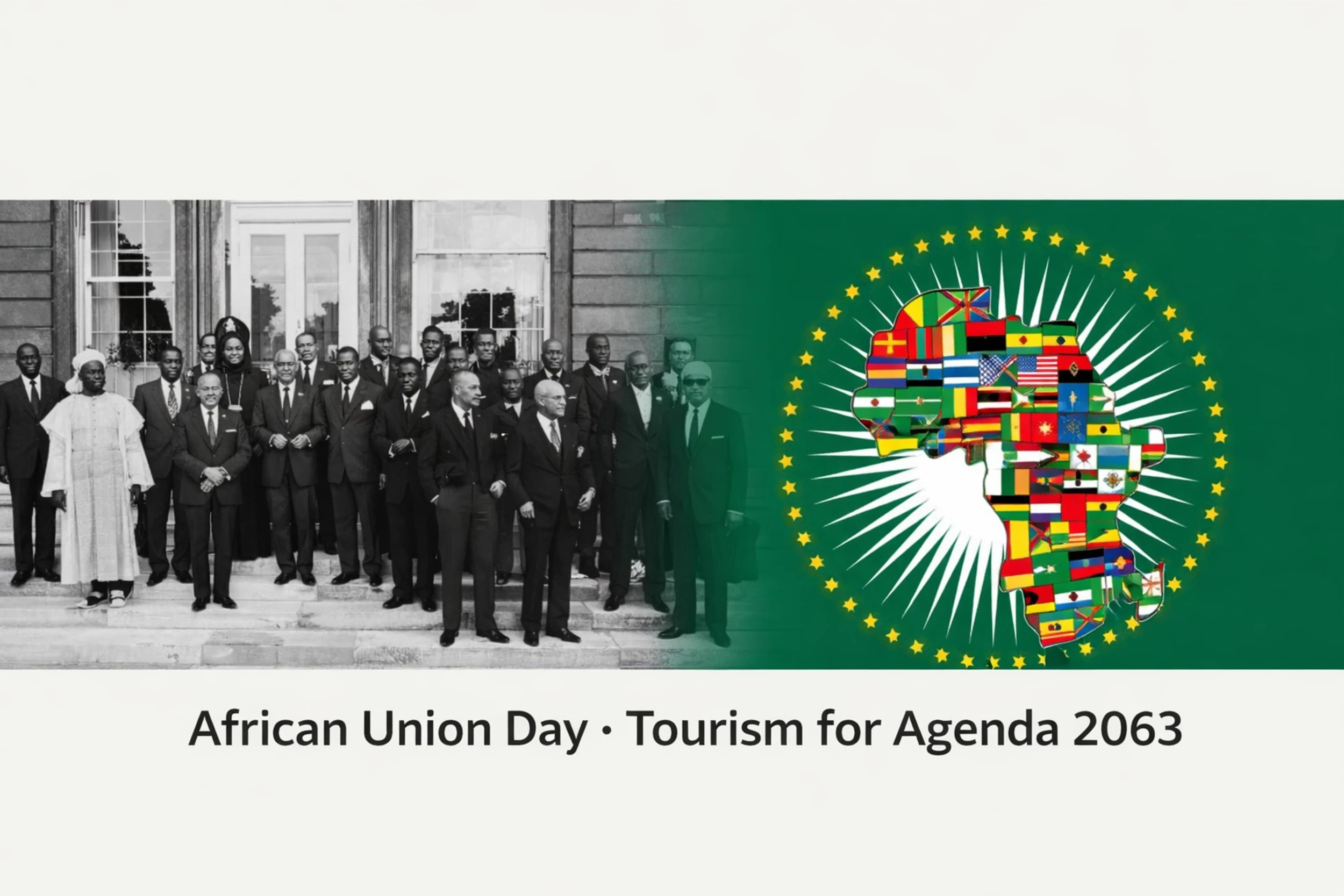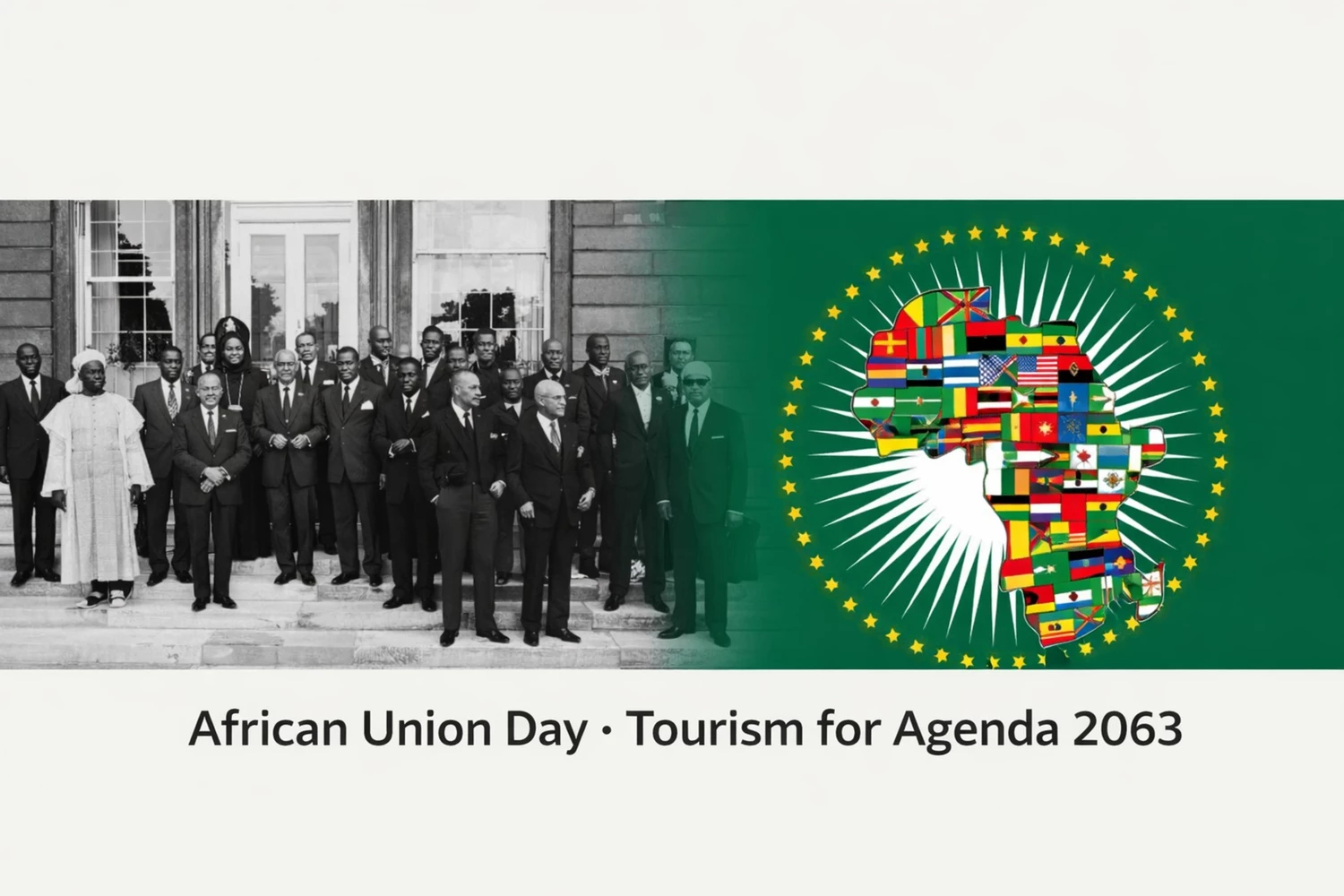
Every year on May 25, Africans across the continent and in the diaspora celebrate African Union Day, a day that reminds us of the vision, resilience, unity, and aspirations of Africa. From the transformation of the former Organization of African Unity into the African Union, the continent has continued to pursue integration, peace, economic prosperity, and sustainable development.
Today, as Africa reflects on its journey, the tourism and hospitality sector stands out as one of the most powerful instruments capable of driving the continent toward the realization of African Union, the blueprint for “The Africa We Want.”
Africa’s Progress Through Tourism and Hospitality
Over the past two decades, Africa has experienced remarkable growth in tourism and hospitality. Countries such as Rwanda, Ghana, South Africa, Kenya, Morocco, and Egypt have demonstrated how tourism can contribute significantly to economic growth, employment creation, cultural preservation, and international visibility.
Africa has become globally recognized for:
- Eco-tourism and wildlife conservation
- Cultural and heritage tourism
- Medical tourism
- Festivals and creative arts
- Business tourism and conferences
- Gastronomy and hospitality innovation
- Sports and adventure tourism
The hospitality industry has equally evolved with the rapid growth of hotels, resorts, airlines, restaurants, tour operations, digital booking platforms, and tourism training institutions across the continent. International hotel brands continue to expand into African cities while local hospitality entrepreneurs are creating uniquely African experiences that celebrate culture, music, food, fashion, and indigenous traditions.
The implementation of initiatives such as the African Continental Free Trade Area and the Single African Air Transport Market has also opened discussions around easier movement, intra-African trade, and regional tourism integration.
The Untapped Potential of African Tourism
Despite these gains, Africa still receives a relatively small percentage of global tourist arrivals compared to its enormous cultural and natural assets. The continent possesses:
- The world’s youngest population
- Rich biodiversity and wildlife
- Thousands of cultural festivals
- Historical heritage sites
- Warm hospitality traditions
- Diverse cuisines and languages
- Expanding creative industries
Yet, several challenges continue to limit growth:
- Poor transportation connectivity
- High airfare costs within Africa
- Restrictive visa regimes
- Inadequate tourism infrastructure
- Limited investment in tourism marketing
- Insecurity and political instability in some regions
- Weak collaboration among African states
- Insufficient tourism research and data systems
Many Africans still find it easier and sometimes cheaper to travel outside the continent than to travel within Africa. This reality undermines the spirit of African integration envisioned by Agenda 2063.
Tourism as a Catalyst for Agenda 2063
Tourism is not merely a leisure activity; it is a strategic economic and diplomatic tool. If properly harnessed, tourism can become one of the strongest pillars for achieving Agenda 2063.
1. Promoting African Integration
Tourism encourages people-to-people connections. Increased intra-African travel will deepen cultural understanding, regional cooperation, and Pan-African identity. Simplified visa systems (as Ghana launches its e-Visa today) and a common African passport can significantly boost movement across borders.
2. Creating Jobs for the Youth
Africa’s youthful population presents both a challenge and an opportunity. Tourism and hospitality are labour-intensive sectors capable of creating millions of jobs in:
- Hotels and accommodation
- Transportation
- Tour guiding
- Event management
- Culinary arts
- Digital tourism marketing
- Creative arts and entertainment
- Handicrafts and cultural enterprises
Empowering young people through tourism skills training can reduce unemployment and poverty.
3. Empowering Women
Women constitute a large percentage of Africa’s hospitality workforce. Supporting women-owned tourism enterprises, restaurants, craft businesses, and community tourism initiatives will contribute significantly to gender equality and economic inclusion.
4. Preserving African Culture and Heritage
Tourism helps preserve languages, traditions, monuments, festivals, and indigenous knowledge systems. Africa must intentionally protect its cultural identity while showcasing it proudly to the world.
5. Enhancing Africa’s Global Image
For decades, global narratives about Africa have often focused on conflict, disease, and poverty. Tourism provides an opportunity to rewrite the African story by projecting innovation, beauty, resilience, creativity, and opportunity.
Initiatives such as the Year of Return demonstrated how cultural tourism can reconnect the African diaspora to the continent while generating substantial economic impact.
What Must Be Done Moving Forward
To fully leverage tourism for Agenda 2063, African governments, private sector stakeholders, academia, and regional organizations must work collectively.
Strengthen Intra-African Connectivity
African airlines should collaborate more effectively to reduce airfare costs and improve direct routes between African cities.
Implement Visa-Free Travel
Visa restrictions remain one of the biggest barriers to tourism growth in Africa. Greater implementation of visa-on-arrival and visa-free policies will enhance mobility.
Invest in Tourism Infrastructure
Roads, airports, rail systems, hotels, convention centers, and digital infrastructure must be improved to support tourism development.
Promote Domestic and Regional Tourism
African countries should encourage citizens to explore destinations within the continent through affordable travel campaigns and educational tourism initiatives.
Support Tourism Education and Research
Institutions offering tourism and hospitality education must receive stronger support to develop skilled professionals and produce reliable industry data for policy formulation.
Encourage Public-Private Partnerships
Governments alone cannot drive tourism growth. Collaboration with private investors, tourism associations, airlines, technology companies, and local communities is essential.
Harness Digital Innovation
Africa must embrace digital tourism platforms, artificial intelligence, virtual marketing, smart tourism systems, and online booking technologies to remain globally competitive.
Promote Sustainable Tourism
Environmental conservation and climate resilience should remain central to tourism development to protect Africa’s ecosystems for future generations.
Conclusion
African Union Day is not only a celebration of the continent’s past achievements but also a call to action for the future. Tourism and hospitality offer Africa a unique pathway toward economic transformation, unity, cultural pride, and sustainable development.
The continent possesses all the ingredients necessary to become one of the world’s leading tourism destinations. What is required now is stronger political commitment, strategic investment, regional collaboration, and a collective African vision.
As Africa moves steadily toward Agenda 2063, tourism must no longer be treated as a peripheral sector. It should be recognised as a continental development priority capable of connecting Africans, empowering communities, creating prosperity, and showcasing to the world the true beauty and potential of Africa.
Indeed, the road to “The Africa We Want” can be built through tourism.
Emmanuel Frimpong is a Tourism Consultant, Analyst, and the Founding President of Africa Tourism Research Network (ATRN) and Co-founder of Africa Medical Tourism Council (AMTC) | Tel. No. +233261128507 | Email: [email protected]